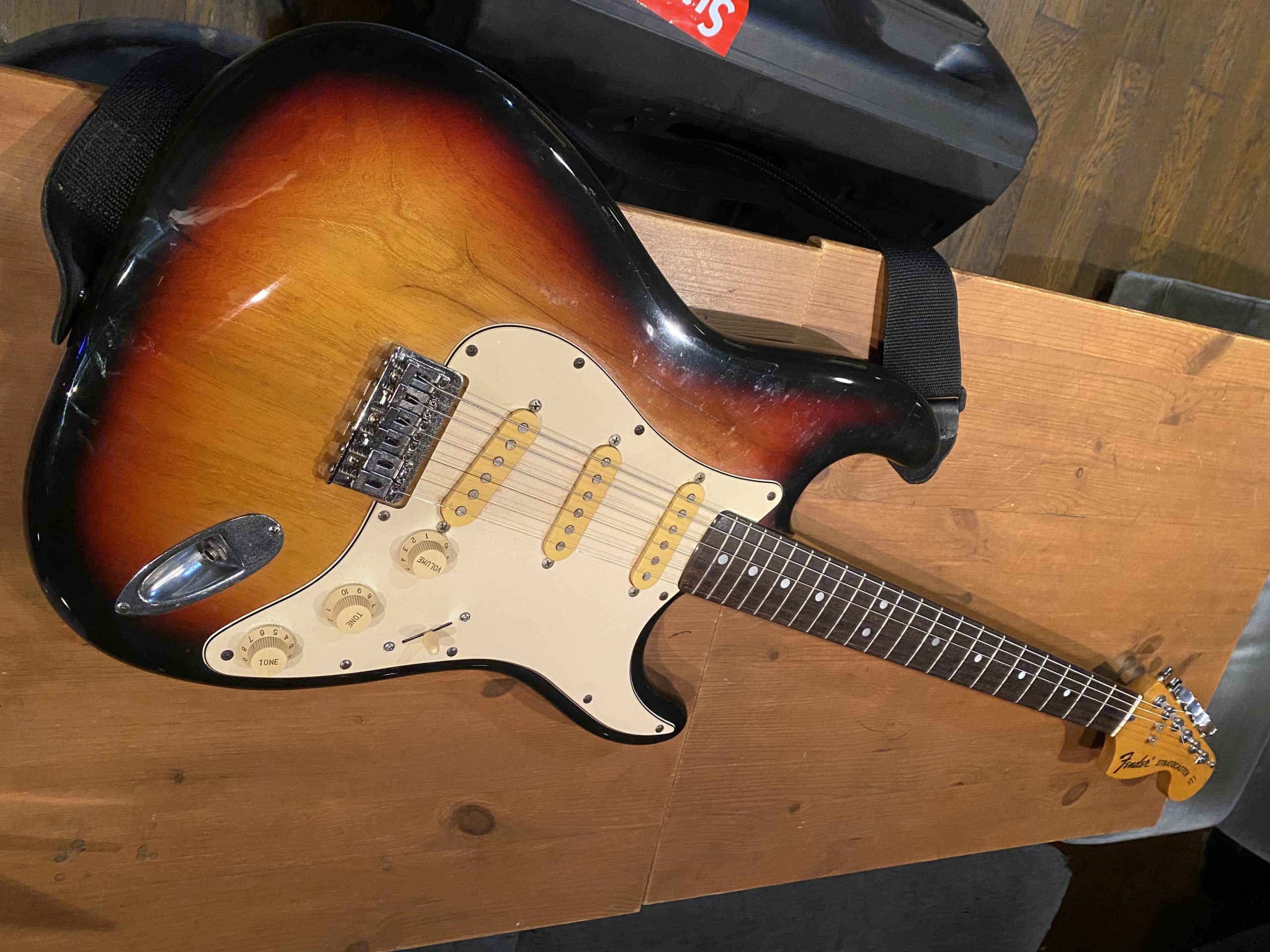

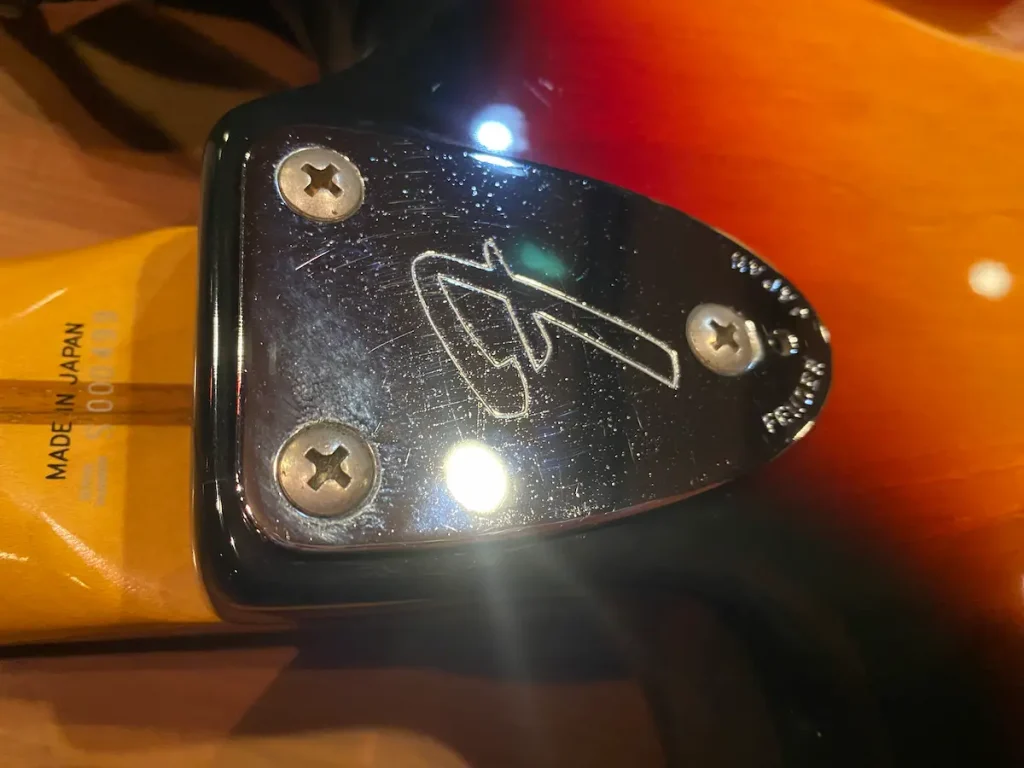
This guitar also belongs to the owner of a live house I frequent, and since it’s quite a rare piece, I’d like to introduce it. It’s a Fender Japan ST72-HT (S-serial) Hardtail, apparently made by Daina Gakki around 2006 to 2008. It’s a cool guitar with a 70s-style large headstock.
What kind of company is Dyna Instruments?
By the way, I wasn’t familiar with Daina Gakki, so I looked it up. It’s a guitar manufacturing plant located in Nagano Prefecture. Around 1997, it started primarily handling production for Fender Japan (Fujigen was the well-known manufacturer before that).
Frankly, I’d never heard of Daina Gakki for any products other than these Fender Japan guitars. So, is it a small-time company? But would Fender really outsource production to a minor instrument maker? All sorts of questions started popping up… The answer turned out to be this.
Because it’s a “factory,” not a “brand”
Dyna Instruments focuses its business not on aggressively marketing its own brand (such as guitars named “Dyna”), but on receiving commissions from renowned manufacturers and flawlessly crafting instruments exactly to their specifications.
Contract Manufacturing Experts: Beyond Fender, Dyna has also produced specific Gretsch models, Ibanez, Epiphone, and in Japan, some Mavis guitars for Ishibashi Gakki and History guitars for Shimamura Gakki.
Confidentiality: Due to contracts with many manufacturers, they rarely advertise “We made this!” Instead, they strictly adhere to their role as the behind-the-scenes support, the “black box,” upholding the quality of the “Fender” brand.
Dyna Instruments focuses its business primarily on receiving commissions from renowned manufacturers and flawlessly crafting instruments according to their designs, rather than heavily promoting its own brand (such as guitars named “Dyna”).
Differences in Strategy with Fujigen (FGN)
Fujigen, often cited as a comparison, launched its own brand (FGN) and stepped into the spotlight. Dyna Musical Instruments, on the other hand, chose to remain strictly behind the scenes, aiming to stay the “best manufacturing line” trusted by numerous manufacturers.
This strategic difference has resulted in a situation where the general public rarely hears their name. However, among enthusiasts who take guitars apart to inspect their internals or study serial numbers, Dyna-made products command immense trust, with the sentiment “Dyna-made is solid.”
In 2015, the Fender Japan brand ceased operations. It has since been replaced by the “Fender Made in Japan (MIJ)” series, directly managed by the parent Fender company. Dyna Instruments remains the primary manufacturer for this MIJ series to this day.
In summary, Dyna Instruments is the ‘shadow protagonist’ that has consistently supported world-renowned brands like Fender and Gretsch without flaunting its own name. It seems the precise guitars born from this thorough dedication to the background role were the true identity of these S-serial Stratocasters.
Fender Japan ST72-HT (S-Serial) Hardtail
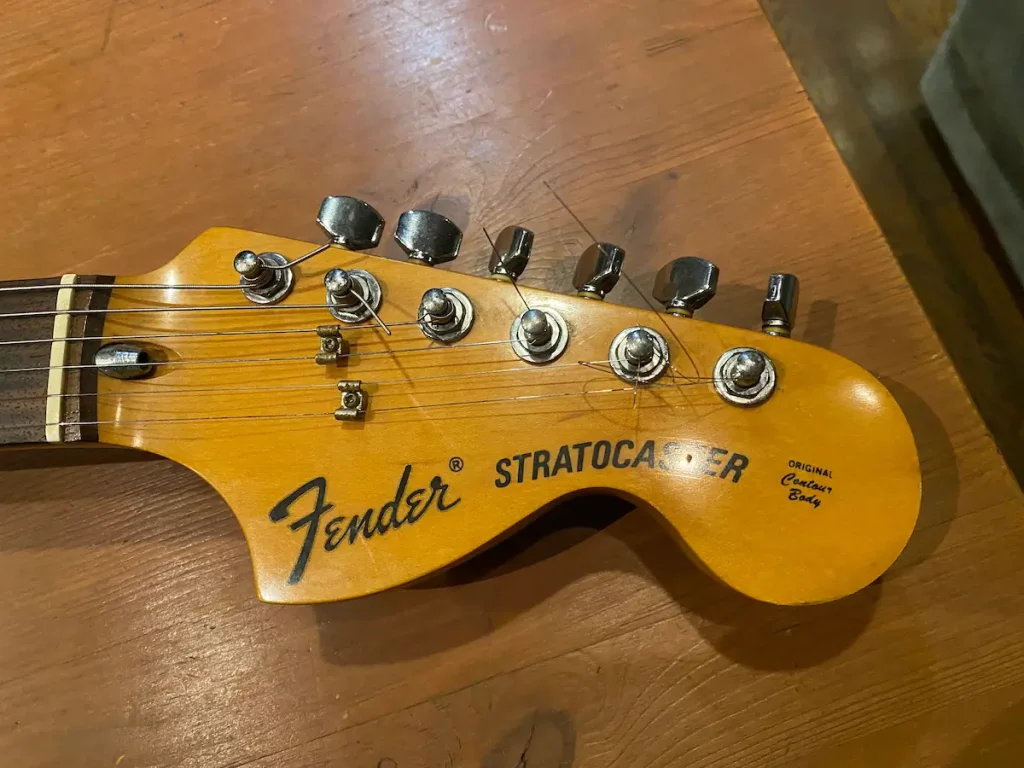
When we first started playing instruments, the first guitar we saw was this large-headstock model. It seems to be called a bread truss rod, but the sight of that bullet-like nut protruding from the headstock brings back memories of our childhood dreams and even feels a bit nostalgic.
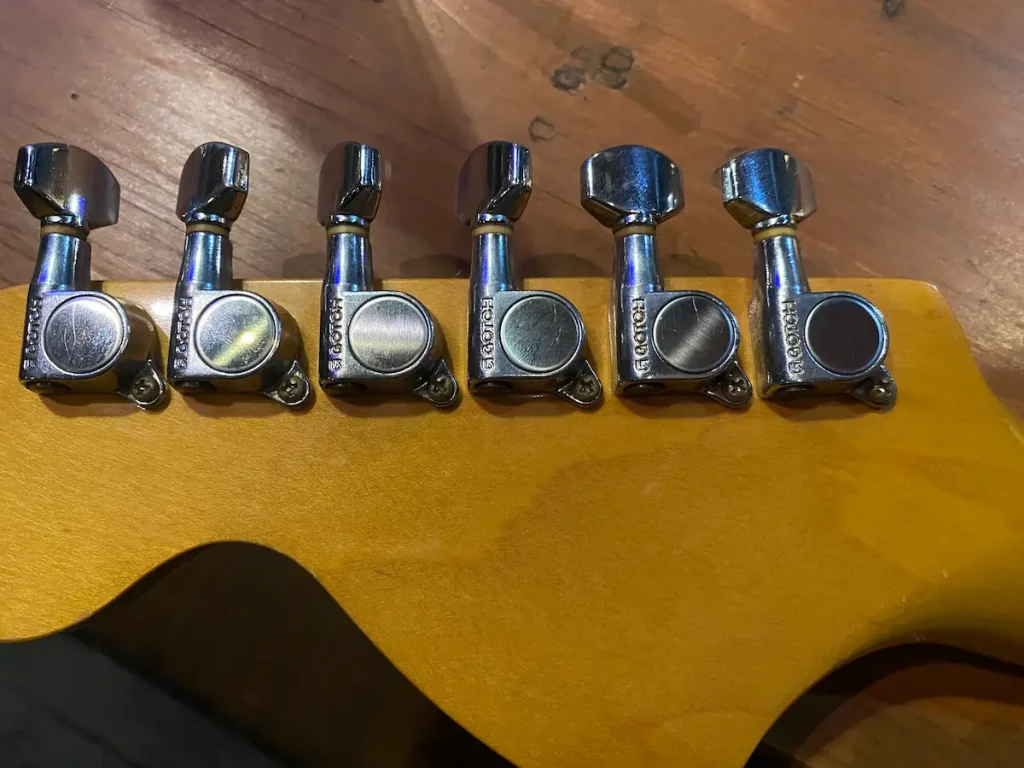
And it uses Goto tuners. Thanks to these tuners, the stiff maple neck, and the hardtail bridge, the tuning stays incredibly stable.
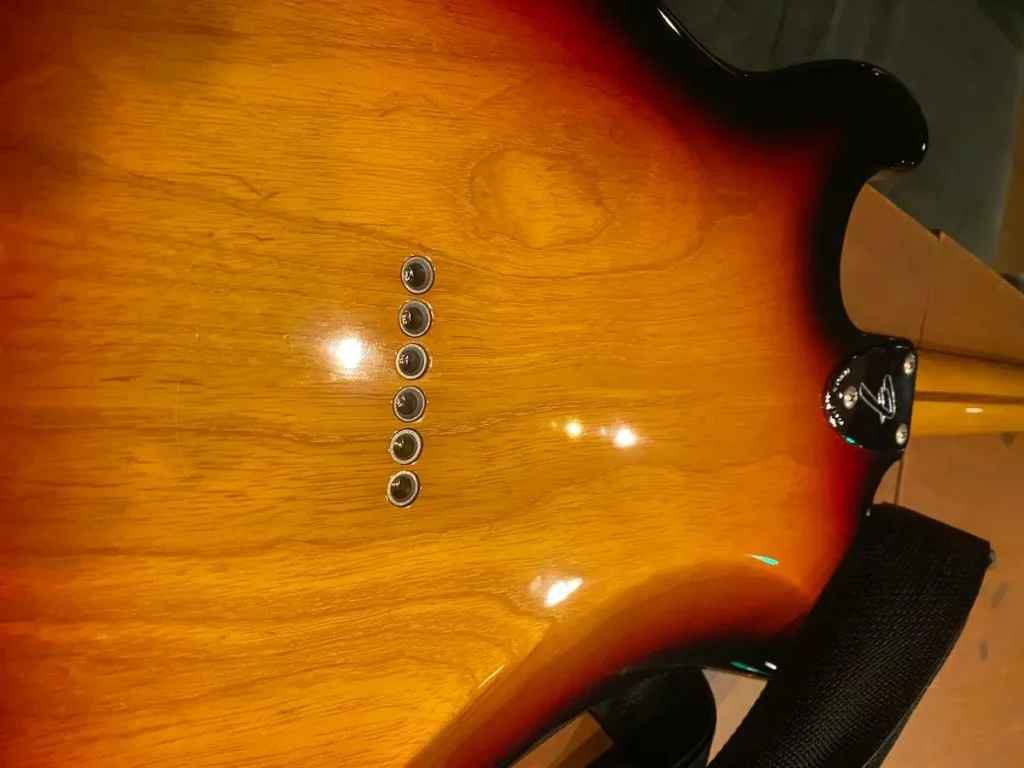
This is why it’s called a hardtail—the string routing that passes through the body like a Telecaster. This is the Strat’s most distinctive feature. While a standard Strat has a large cavity hollowed out inside the body for the tremolo unit, the hardtail is packed solid with wood.
As a result, it produces a strong bass response and a powerful, punchy attack sound you wouldn’t expect from a Strat. It does have a bit of a Telecaster feel. This ST72-HT is a Stratocaster that’s specialized in “how to transmit string vibration directly to the body,” making it somewhat akin to a Telecaster. For guitarists who want powerful cutting without worrying about tuning instability, it might be the ultimate choice.
Compared to a Telecaster, a Stratocaster has pickups mounted on the pickguard and a bridge pulled by springs, giving it a somewhat tube-like sound that I personally love. This guitar feels like a hybrid between a Telecaster and a Strat. But that hybrid sound is actually pretty great!
コメント