Ibanez’s “Artist” Series
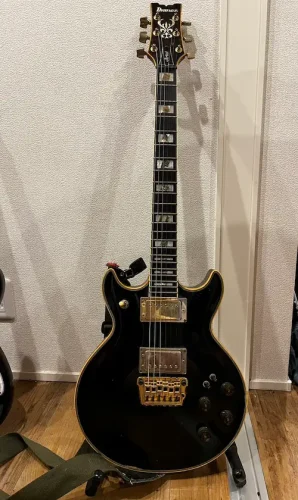
This Ibanez guitar belonged to my wife since she was in high school, and I believe it was probably made around 1975. To think she used to commute to school by train carrying this guitar and her effects pedals—my, she was quite the tough cookie. By the way, her son uses it now, and this photo was taken at his place and sent to me.
Greco and Ibanez: Two Brands United by Fujigen
From the 1970s through the 1980s, Fujigen in Nagano Prefecture was extremely busy. The domestic Greco brand was produced by Kanda Shokai and boasted an overwhelming market share within Japan.
Meanwhile, overseas Ibanez guitars were developed by Hoshino Gakki for export. Later, professionals like George Benson began using them, and the brand grew globally. Since they were made by the same Fujigen, there were many similarities in materials, finish, neck construction, and so on. It seems identical models existed back then, sharing the same specs except for the headstock logo.
The background to this was the late 70s, when regulations against copy models became stricter. Fujigen began making “not copies, but original guitars.” These became Ibanez’s Artist series and Greco’s GO series. Eventually, Ibanez exploded in popularity overseas, leading to the global perception that “Ibanez = Fujigen’s masterpiece.”
Ibanez Artist Series: What kind of guitar is it when you actually play it?
First impression: “Heavy!” … That’s because it uses high-quality mahogany, and the bridge and such are like solid chunks of metal, so it’s just heavy. It’s the kind of guitar that makes you think you’d need serious stamina to use it for a long live show. Well, my buddy’s son has plenty of stamina, so he’ll be fine.
Then, my buddy insists it just really delivers on the low end! She says at the live house, She had herJazz Chorus set to treble = 10, bass = 0.
Plus, there’s this anecdote about her stomping the wah all the way down to get that jangly sound, which got her a snide remark from the live house staff.
On the other hand, it’s a bit strange, but he says it has a loud natural sound! Normally, with a heavy, solid bridge, sustain tends to increase while the natural sound gets quieter, but maybe the wood resonance was exceptionally good? I’d like to hear it for myself next time I get the chance.
The combination of the set-neck construction, the substantial body, and the proprietary pickups (like the Super 58) produces a sound that’s creamier and has more sustain than a Les Paul. It’s also perfectly suited for aggressive metal riffs, and her son apparently uses it for that style.
The finish is stunning, especially the abalone binding and the flower inlay on the headstock, making it a truly satisfying instrument to own.
From the late 1970s through the 1980s, Ibanez (Hoshino Gakki) and Fujigen poured their hearts into creating originals that would surpass Gibson! This model achieves both the substantial feel of a Les Paul and the playability of high positions via its double cutaway design. It’s often praised as the pinnacle of functional beauty and can truly be called a flagship of Japanese vintage guitars.
コメント