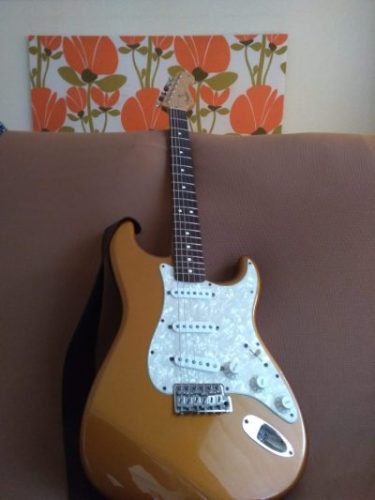
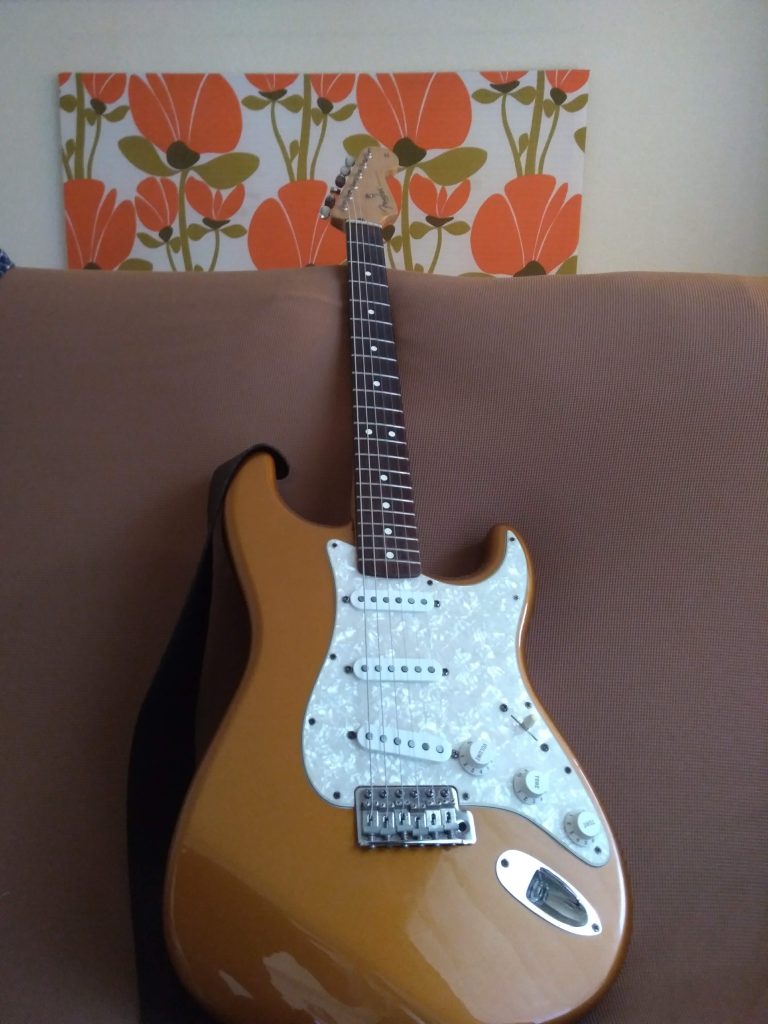
I’ve been using a Fender Japan Stratocaster for a long time. It had a mature sound that wasn’t bad, but since my musical life revolves mainly around playing guitar in sessions, I’ve always been searching for an all-purpose guitar. That’s when I came across the Fender Mexico Powerhouse Stratocaster.
This guitar is really well-made, and I genuinely believe its quality is on par with recent Fender USA models. So, I decided to investigate why. After all, it’s a Fender Mexico (Ensenada factory). When the factory first opened, it had a reputation for being “cheap and nasty.” I felt that way based on my own experience too.
But that perception changed dramatically with the products from the 1990s. Now, it’s regarded as a “reliable workhorse,” beloved by both pros and amateurs alike. Why did the quality improve so dramatically during this period?
- The February 1994 Ensenada Plant Fire
In February 1994, a major fire broke out at the Ensenada factory in Mexico. This caused catastrophic damage to the factory’s production lines, forcing Fender to temporarily halt production in Mexico.
However, rather than “giving up on Mexican production,” Fender’s management at the time made the decision that “the USA factory would fully back up Mexico.”
- Full Support from the Corona Factory (USA)
To maintain production while the Ensenada factory was rebuilt, the following measures were implemented:
Supply of USA-made parts: Wooden parts (bodies and necks) that could no longer be processed in Mexico were cut at the Corona factory in California, USA. These were then shipped to Mexico for finishing and assembly.
Introduction of State-of-the-Art Equipment: During the post-fire reconstruction, the Ensenada factory was equipped with cutting-edge machinery (such as CNC routers) equivalent to that in the USA factory. This significantly reduced individual variations caused by previous manual craftsmanship and dramatically improved machining precision.
Thorough Technical Guidance: Skilled staff from the Corona factory were dispatched to Ensenada to manage production processes and elevate quality standards to USA levels.
- The Reversal Phenomenon: “Made in Mexico, Inside and Out”
The reason Mexican-made guitars from this period (mid-to-late 90s) received such high praise is that there was an actual period where they were “made with the same wood, the same machine tools, and the same quality control as USA-made guitars.”
The following points, in particular, are famous as “The Truth About MIM”:
Necks and Bodies: Standard Series guitars of the time, for example, were rough-cut at the Corona factory and then shipped to Mexico.
Finish Evolution: Rebuilding the factory established superior paint booths in both environmental and quality aspects, enhancing the beauty of the finish.
- The Ongoing Status of “MIM” Today
Following this fire and reconstruction, Fender established its current strategy: not a simple hierarchy of “USA = high-end” and “Mexico = low-cost (poor quality)”, but rather “maintaining common quality while creating price differences through specifications and parts.”
The reason today’s Mexican-made instruments (such as the Player series) are trusted as “instruments professionals can use on stage” is precisely because they overcame the disaster of the 1994 fire and walked hand-in-hand with the USA factory throughout their history.
Summary: The remarkable rise of Fender Mexico in the 1990s was no accident. It was achieved through strategic investments by management, the introduction of cutting-edge technology, and collaboration with the USA.
It is precisely because of the solid foundation built during this era that high-quality Mexican-made Fender guitars, represented today by the Player Series, exist.


コメント