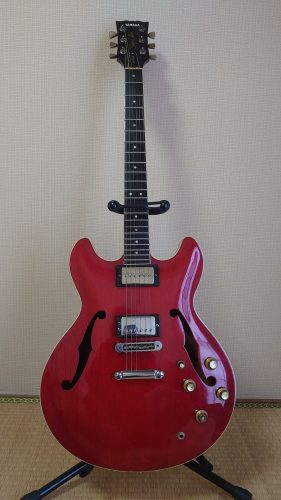

Yamaha’s masterpiece guitar from the days when I couldn’t possibly afford a Gibson ES-335
In the late 1970s, when fusion was all the rage and Lee Ritenour and Larry Carlton were popular, every young guitar enthusiast dreamed of owning a semi-acoustic guitar like the Gibson ES-335. However, costing around 300,000 yen at the time, it was hardly something a youngster could easily afford.
Considering that a college graduate’s starting salary back then was around ¥110,000, and a cup of coffee at a cafe cost about ¥250, the ES-335 was essentially equivalent to ¥600,000 today.
It was precisely at this moment that Yamaha, with perfect timing, introduced the SA series to the world in 1977. I truly believe this guitar is worthy of being called a Japan Vintage.
See Yamaha’s commitment!
The original price was, as the name suggests, 100,000 yen. This was nearly a month’s salary for a new college graduate at the time. It truly occupied the position of a “lifetime instrument” that working adults bought with serious commitment. While inspired by the Gibson ES-335, it incorporated “Japan’s own unique design” that went beyond being a simple copy.
The fingerboard is crafted from premium ebony—a luxury that would be unthinkable in this price range in today’s market. It also features a unique center block made of Spruce and Maple, providing a crisp, well-defined attack. Compared to a Gibson ES-335, Yamaha’s distinct design philosophy results in a much more solid and focused sound.
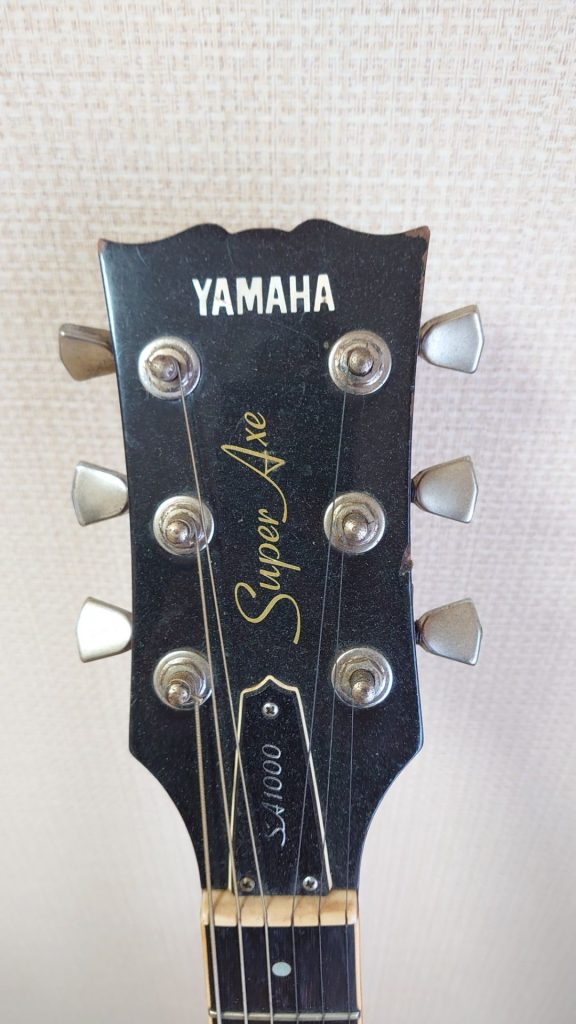
The Story of How I Got My SA-1000 / My First Pro Shop Adjustment
I got this SA-1000 because a friend of mine, who was a pro guitarist at the time, injured his finger and had to give up playing guitar.
After getting this guitar from him cheaply, I was too busy with work for a while and drifted away from music. Then, I think it was around the end of my thirties, something happened that made me want to play guitar again, so I opened this guitar’s case.
Unfortunately, over the years, the neck had warped, making it quite difficult to play. So, for the first time in my life, I took it to a professional for adjustment.
The result surprised me. The truss rod was tightened all the way to the limit, meaning it couldn’t be turned any further, but the neck was completely straight. It’s stayed perfectly straight for the past 20 years since then.
And most importantly, they leveled the frets, lowering the string height to the absolute minimum. Over time and through playing habits, frets can develop uneven heights. Leveling them prevents the strings from hitting unwanted spots and allows for a lower string height.
I recommend taking the plunge and getting a professional adjustment at least once because I believe everyone should experience a well-adjusted instrument. Amateurs usually just use their instruments as-is, but that means they never know how far their instrument’s condition can actually be pushed.
The Yamaha SA series is a lifetime companion for me.
With all that said, I still have this SA-1000 here, and I occasionally use it at live venues and such (though honestly, it doesn’t get much playtime, overshadowed by my other guitars…).
If I had to point out a weakness, it would be the pickups. While preferences vary, the output is on the low side, and they also tend to be a bit prone to feedback. That’s why I decided to swap out the pickups, and the ones I chose were these slightly unusual ones.
Seymour Duncan SPH90-1 Phat Cat
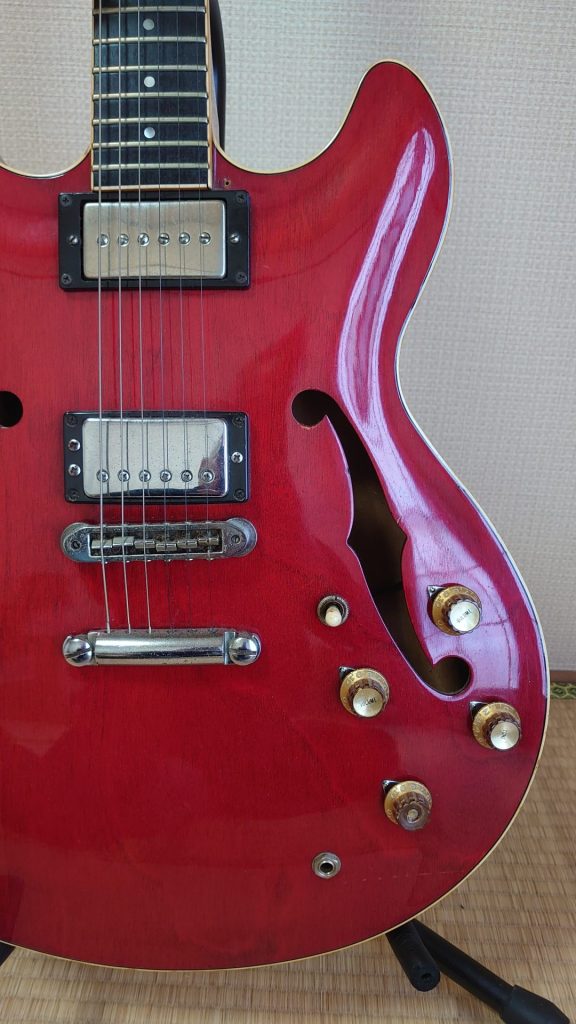
Now, if you look closely at the photos of this guitar, you’ll see I swapped out the front pickup for a single-coil. I love the P-90 sound, and since I use it for sessions and live houses, I also owned a Gibson SG with P-90s back then.
This Fat Cat, developed by Duncan Custom Shop, is a P-90 that can be installed without modification on guitars with humbuckers. I thought it was fantastic and swapped out the front pickup as soon as I found it.
As for the sound impression, it definitely has that P-90 flavor, but the output feels significantly higher. Incidentally, it’s considerably louder than this guitar’s original rear humbucker pickup, throwing the balance off a bit. Oh well… or rather, I should probably adjust it.

コメント